
A Home for Toshiko: Artists, Relationships, and RAM
For almost half a century, Toshiko Takaezu’s work has had a home in Racine.
That may seem surprising for an artist whose career took her from Hawaiʻi to some of the leading art schools and museums in the country. But Takaezu’s connection to the Racine Art Museum (RAM) was not incidental. It was built over time, through gifts, conversations, shared interests, and a mutual belief in the importance of contemporary craft.
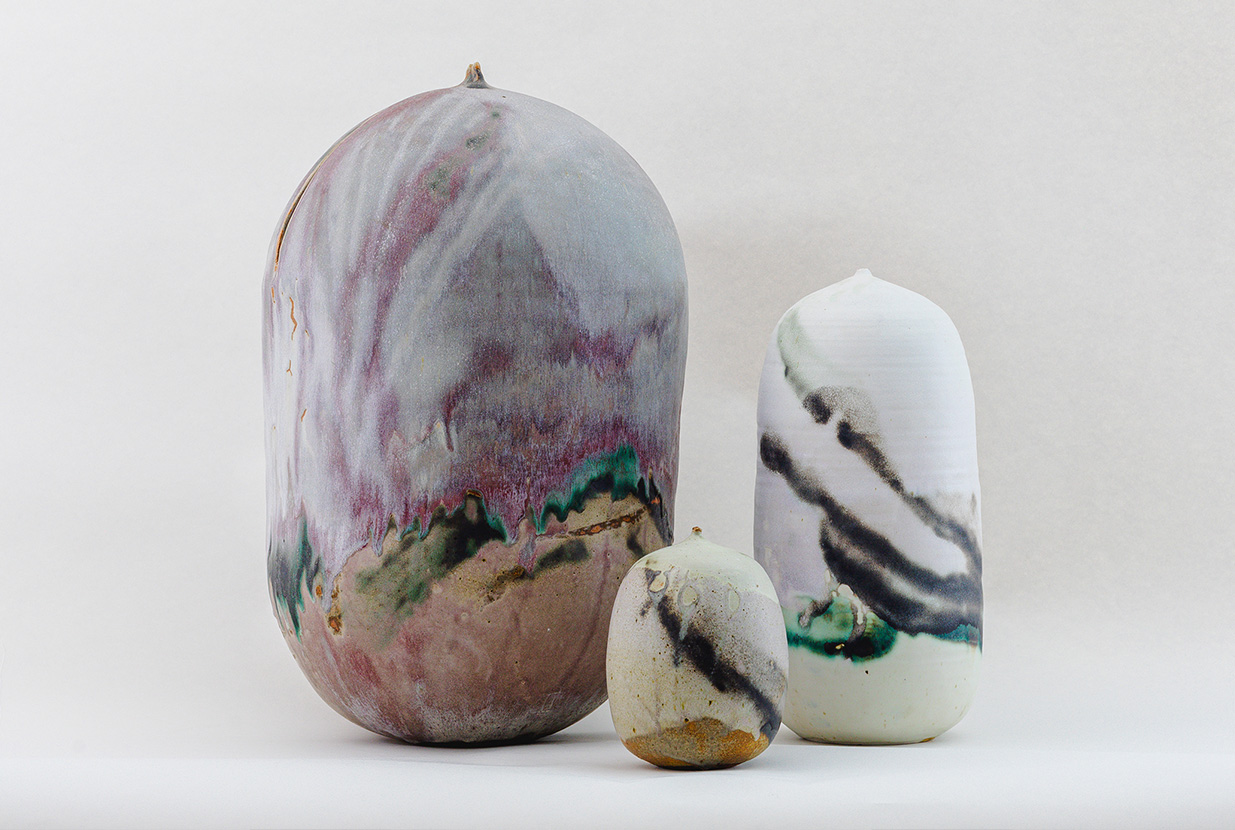
As several of her works return to RAM this fall following a national tour, they will be featured in Welcome Home, Toshiko: The Toshiko Takaezu Archive Debuts at RAM. Their return offers an opportunity to look beyond the individual objects and consider the relationship that brought them into the museum’s collection in the first place.
During her lifetime, Takaezu gifted works to RAM’s collection and contributed pieces to be sold in support of the museum’s collection operations. Introduced to RAM by her connection to longtime artwork donor and supporter Karen Johnson Boyd, she recognized RAM as an institution committed to contemporary craft at a time when the field itself was changing. Her work helped redefine what ceramics could be, while RAM was building a collection and a community around the idea that craft could be ambitious, experimental, and intellectually engaging.
Takaezu was born in Hawaiʻi to Okinawan immigrant parents and developed a practice deeply informed by her cultural heritage, the natural environment, and her experiences as an artist and teacher. Although ceramics became her primary medium, she worked across painting, fiber, bronze, and sculpture. Her signature closed forms transformed the familiar vessel into something more mysterious and expansive—part sculpture, part painting, part sound-making object.
Her work can be found today in museums across the country. But the presence of Takaezu at RAM is different. It is not simply a matter of a museum acquiring important works by an important artist. Her relationship with RAM developed over the course of her career, and her generosity helped shape the collection that exists today.
That distinction gets at something fundamental about RAM.
Museums often talk about collections in terms of objects: how many works they hold, who made them, when they were created, and how they came into the collection. But behind those objects are people. Artists who trusted the museum with their work. Collectors who saw something worth preserving. Donors who understood that a work could have a life beyond their own walls. Curators and staff who maintained those relationships over many years.
RAM’s collection has been built in this way—with relationships that often extend far beyond a single acquisition or exhibition.
Takaezu is one of the clearest examples. Her work first became part of RAM’s collection decades ago, and the relationship continued as her practice developed and the museum’s collection grew. Today, RAM holds approximately 125 of her works, including the complete Star Series, a group of monumental closed forms that Takaezu spent approximately 15 years developing. It is the largest single museum holding of Takaezu’s work in the United States.
The significance is not simply that RAM has so much of her work. It is that the museum has been able to follow an artist’s career, preserve different moments of her practice, and share that evolving story with successive generations of visitors.
That kind of continuity is increasingly rare—and it is one of the things that makes RAM unique.
A museum rooted in contemporary craft has the opportunity to build relationships with artists while their practices are still unfolding, rather than waiting decades to recognize their significance. Those relationships can shape a collection in ways that are difficult to predict at the outset.
Takaezu’s story is a reminder of what can happen when an artist and an institution continue to invest in one another over time. Her work traveled far beyond Racine, but a meaningful part of her legacy remains here.
And that is perhaps what it means for an artist to find a home in a museum: not simply that her work is preserved there, but that her ideas, relationships, and contributions become part of the institution’s ongoing story.