
A Museum of Its Community: Robb Woulfe and the Future of RAM
A museum is shaped not only by what it collects, but by the place it inhabits.
When Robb Woulfe arrived as the new executive director of the Racine Art Museum (RAM) in 2025, he inherited an institution with a remarkable foundation and a national reputation for contemporary craft. But for Woulfe, the opportunity was not simply to build upon what RAM had already accomplished. It was to consider what the museum could become—and what it could mean—to the city it calls home.
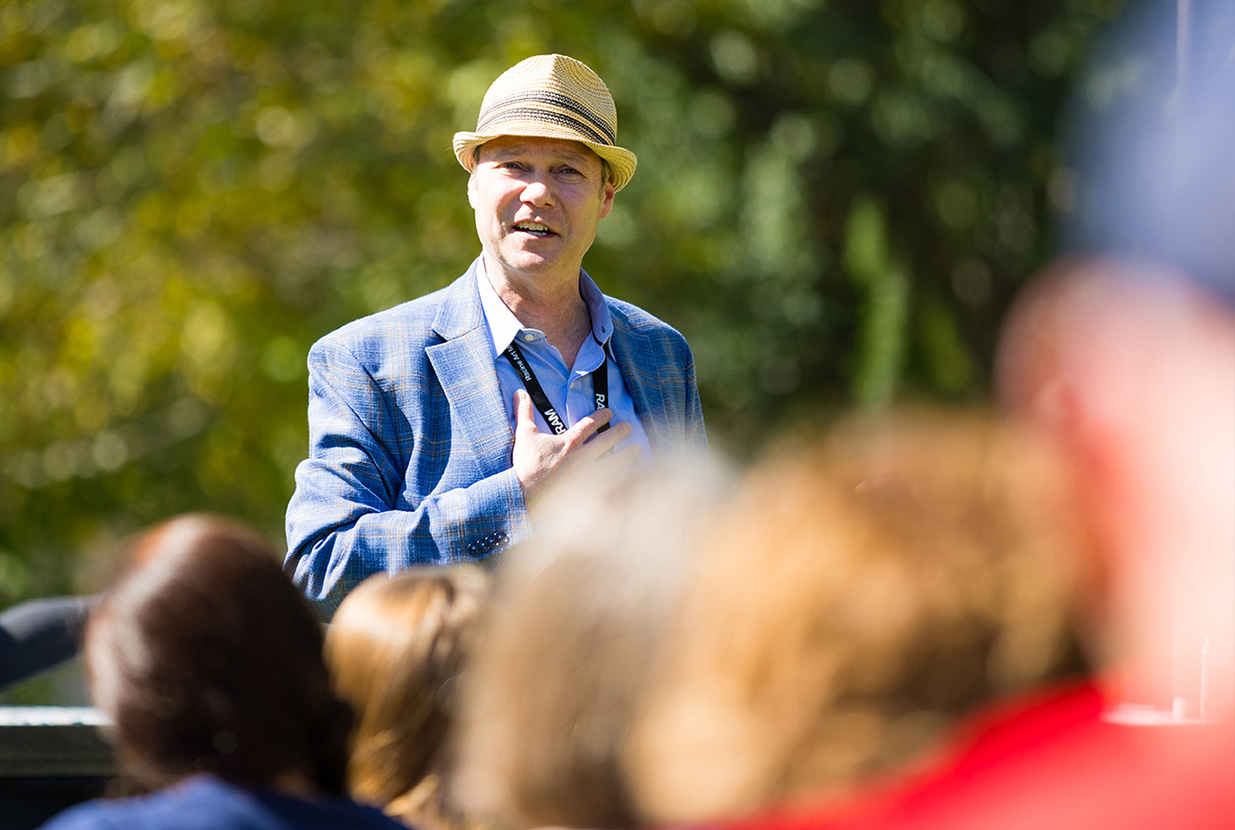
Born and raised in Saint Paul, Minnesota, Woulfe has spent three decades working across the arts in a diverse range of settings, including museums, festivals, concert halls, campuses, and municipalities. His career has taken him through leadership positions in Minnesota, Michigan, Colorado, and, most recently, California, but the common thread has been less about the type of institution than the places and people with whom he has worked.
Place has been central to Woulfe’s approach to the arts. Whether working in a mountain community, coastal city, or the Midwest, he has been interested in how local history, culture, and environment can influence artistic expression—and how that creativity, in turn, can help us see our surroundings differently. He sees cultural organizations as part of the ecosystems in which they operate: institutions that listen, convene, and provide opportunities that strengthen their communities.
For Woulfe, place is never simply a backdrop for art. It is a collaborator.
That perspective is particularly resonant in Racine, a Wisconsin harbor town shaped by Lake Michigan, manufacturing, immigration, architecture, and a long tradition of making. From its sandy shoreline and industrial landscape to its Frank Lloyd Wright designs and enduring Danish heritage, the city itself is more than context for RAM; it is part of the museum’s potential. Its extensive collection gives RAM a platform, but Woulfe sees an opportunity to root that identity more deeply in the community’s character and inventive spirit.
That means thinking about RAM not only as a cultural institution located in Racine, but as an institution deeply connected to the life of Racine.
The distinction matters. Woulfe believes arts organizations are most impactful when they understand the communities around them not simply as audiences, but as partners in imagining and co-creating more vibrant and livable cities. His work has often brought artists into unconventional spaces and encouraged people to experience art in ways that feel connected to their everyday lives.
In Racine, that ethos can open new possibilities for how RAM engages neighborhoods, artists, students, families, businesses, and civic groups. It can mean finding more ways for the museum’s resources and expertise to contribute to the life of the community and region.
This reflects a larger evolution in Woulfe’s approach to museums and cultural organizations: from a focus on what an institution presents to a greater emphasis on whom it serves and what it contributes. The question is not simply what should happen inside a museum, but what can it help make possible beyond its walls?
For Woulfe, that starts with building deeper relevance—ensuring RAM feels accessible and meaningful to those who encounter it, including younger generations and people who may not have traditionally viewed the museum as a place for them. He sees the institution not simply as a steward of culture, but as a catalyst for gathering, storytelling, exchange, learning, and discovery.
At RAM, that philosophy is opening a new chapter in its story: one that honors the extraordinary collection built over decades while expanding the definition of what contemporary art and craft can be—and who gets to experience it. The collection remains at the heart of that work, but its meaning is not fixed. It can shift with the questions we bring to it, the people who encounter it, and what it reveals to us over time.
That vision reaches outside the museum itself. It is about making RAM matter more—to more people, in more ways—while celebrating what makes Racine unique and allowing that singularity to inform what the institution represents and can become.
Ultimately, the future of RAM is not just about what the museum has collected. For Woulfe, it is about what it can create: experiences that connect people to artists, to ideas, to one another, and to a particular place. The goal is a museum that is unmistakably of its community—not simply in it.