
To Display or Not to Display: Sharing Adornment with a Complicated History
Objects can have metaphorical power and weight—embodied meaning that might overwhelm their physical aspects, historical significance, or creative value. There is a small group of wearable objects in the Racine Art Museum (RAM) collection that may seem mundane at first glance but become much more complex as the context of their making and use is revealed. Straightforward in design and instantly recognizable as wearable, this adornment—specifically, incised metal bracelets and neckpieces from West Africa dating from the eighteenth through the twentieth centuries—has layered and potentially uncomfortable histories.
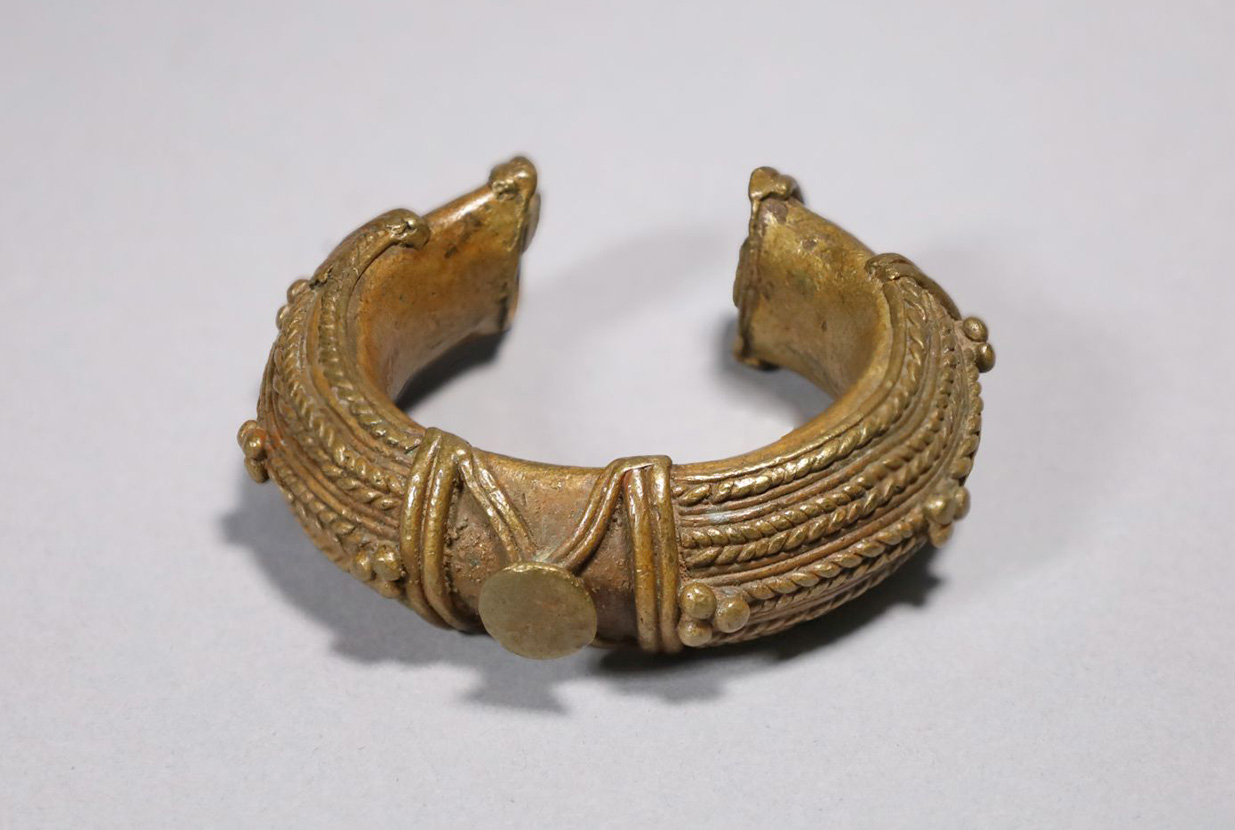
These pieces, collected by someone interested in coinage, were likely used as currency, often within trade or barter networks, in exchange for local agricultural and luxury products. However, pieces like these were also often used in negotiations connected to the transatlantic slave trade. Arriving at the museum with only their countries of origin and approximate dates noted, the objects cannot be identified by the names of their makers or wearers. Yet, as handmade wearables, they connect to a broad history of craftsmanship and personal adornment.
To be clear, objects such as these could have been made in Africa, where different groups may have preferred different materials or patterns. Alternatively, those pieces associated with the slave trade were more likely to have been produced in Europe and introduced into Africa. This form of adornment can also be associated with social status in Africa: a woman might wear numerous metal bracelets or leg bands to reflect her husband’s wealth. The large-scale use of these objects as currency began to decline in the twentieth century, yet these designs are still often used in contemporary African jewelry.
While this adornment/currency links value and social status, it does so differently than the contemporary studio art jewelry rooted in theory and experimentation that is most prominent in RAM’s collection. Recognizing this, and knowing that RAM audiences might need a new framework for encountering adornment with a more nuanced—and culturally charged—backstory, RAM staff sought an informed and authentic context in which to display the work. Thinking of artists who invoke heritage and history, they reached out to contemporary metalsmith Tanya Crane.
Crane, who addresses historical connections and layers of existence through pattern and form, organized an exhibition featuring new and existing neckpieces, brooches, and bracelets she had created; historical examples of African adornment from RAM’s collection; and works by other contemporary artists in the collection who also investigate aspects of their heritage. Crane highlighted the pieces from RAM’s collection as parallels to her own interests, weaving histories together across time and space and establishing a continuum of making. This web highlights sameness and difference simultaneously, acknowledging difficult aspects of cultural narratives while celebrating craft and making. At the same time, it provides a context that can empower the voices of makers and wearers, even across time and distance.
Crane’s personal investment in using jewelry to make connections, along with her stated interest in the history of adornment, made her a good candidate for this provocative project, Tanya Crane: Embodied Histories—Exploring the Legacy of African Jewelry. She was ready to consider the metaphorical weight of these historical metal objects. As she states, “The research for my jewelry encompasses both a response to my immediate landscape and my family stories relative to the impacts of the Great Migration. It is through this lens that I interact with and respond to the museum’s collection, contextualizing that historical work through a contemporary lens and providing a dynamic framework to investigate the past in the present.”
Midway through Crane’s exhibition, another show featuring only historical examples, RAM Showcase: African Adornment, opened in a nearby gallery. This offered an extended opportunity for investigation. Text on the gallery panels balances the objects themselves; for visitors who engage with it, the text summarizes what the objects are and how they functioned within their cultural networks before entering the collection.
Regardless of the framework in which they are situated, displaying these kinds of objects presents challenges. One issue is that some of their meaning has been obscured or lost over time. Who crafted these pieces? What forms of trade or barter were they involved in? Is the information associated with them accurate? Another concern is that some may question the intent behind showing potentially unsettling content in a museum context. Why do it? In this instance, and in connection with work in another gallery, the adornment serves to reframe how wearable pieces can connect past and present. How does a contemporary jeweler respond to historical work? What stories can be told that illuminate and inform, while also building bridges toward a fuller understanding of how adornment can function in different societies?